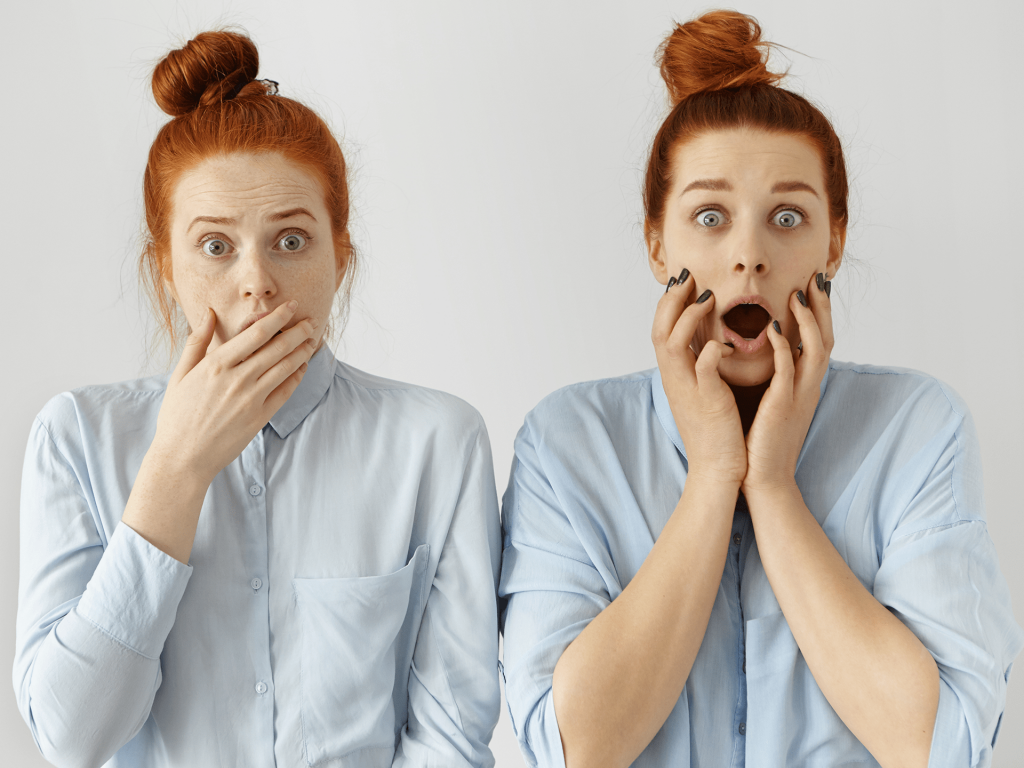
What would your reaction be if we told you that somewhere out there, there are people who look exactly like you?
What would your reaction be if we told you that somewhere out there, there are people who look exactly like you?
Your first reaction would probably be surprise. You’d frown and say, “What kind of nonsense is that?” Some of you might get curious, pull up a chair, and ask, “Could you explain that a bit more?” Others might not even care enough to give it a second thought. But regardless of the initial reaction, the feeling that follows would undoubtedly be fear.
Two bodies that are miles apart, identical in appearance, yet carrying two completely different souls...
And with no blood relation between them at all.
In this age of technology, where we can unlock our phones with our faces instead of passwords, imagine someone easily accessing your personal data. Gives you chills, doesn’t it? You’re probably thinking of dozens of sci-fi movies about clones. But we’re sorry to say: No. It’s not clones that can do this — it’s something much more real:
Doppelgängers!
So, what exactly are these Doppelgängers that we hear about in so many different fields?
The word Doppelgänger is of German origin and generally means ghostly twin or someone who looks eerily similar to another person. In European mythology, it appears as a paranormal phenomenon representing bad luck — it was believed that encountering one’s own Doppelgänger was a sign that death was near. Because of this, it has long been portrayed as an evil twin in literature and art.
Examples of this can be found in Fyodor Dostoyevsky’s The Double (1846), Dante Gabriel Rossetti’s painting How They Met Themselves (1860), and Denis Villeneuve’s film Enemy (2013).
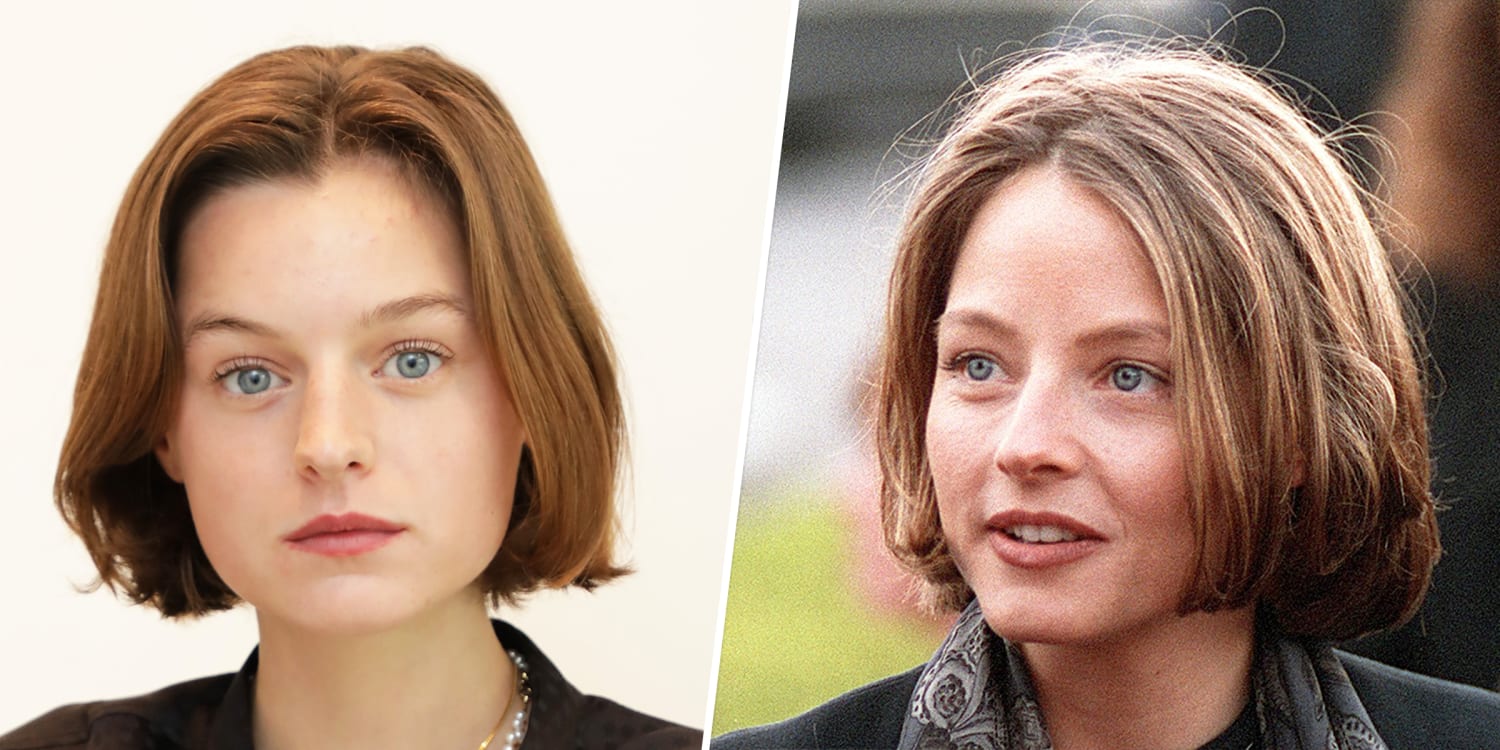
Although the concept of the Doppelgänger is not portrayed positively in these examples, the situation is quite different in modern contexts. Especially after the rise of social media, we’ve started noticing uncanny resemblances between celebrities. The similarities between Jake Gyllenhaal and Çağlar Ertuğrul, Tom Hardy and Logan Marshall, Emma Corrin and Jodie Foster are quite well-known.
https://i20.haber7.net/resize/1300x788/haber/haber7/photos/2021/45/caglar_ertugrul_isyan_etti_cakma_hollywood_yildizi_dediler_1636711214_9224.jpg
https://i.pinimg.com/736x/6f/10/b5/6f10b5c75eb561f44ed7c9311d481491--celebrity-look-look-alike.jpg
https://media-cldnry.s-nbcnews.com/image/upload/newscms/2020_49/1644740/jodie-foster-emma-corrin-te-main-201130.jpg
As these examples increased, an unexpected question arose: Could there be a Doppelgänger of us somewhere out there?
With this question, the focus shifted beyond celebrities. As social media usage grew, people began searching for their own Doppelgängers. The simplest way to start? Comparing ourselves to people in classic paintings! And judging by the examples, some were surprisingly successful at it.
https://i.dailymail.co.uk/i/pix/2017/09/12/16/443126A900000578-0-image-a-60_1505231891007.jpg
As a result, the trend grew rapidly. Some people effortlessly found their Doppelgängers, while others even developed a project called the Twin Strangers Project to find people who looked like them. According to this project’s theory, each person has at least seven look-alikes in the world. Sounds crazy, right? But don’t be so sure — some people actually found their Doppelgängers through this project. And judging by their expressions, none of them were “killed by their evil twin.”
Just look at the resemblance between these people!
https://www.independent.ie/incoming/357c8/34223715.ece/AUTOCROP/w1240h700/Niamh.jpg
Niamh, who found Karen, Luisa, and Irene through this project, had a huge impact on others searching for their Doppelgängers. Thanks to this viral trend on social media, many people began sharing their Doppelgänger photos — even challenging others to do the same.
Ambra and Jennifer were among those who joined this challenge through the project, and they are still searching for a third Doppelgänger who looks as astonishingly similar to them.
https://resources.stuff.co.nz/content/dam/images/1/6/n/g/w/h/image.related.StuffLandscapeThreeByTwo.1464x976.16nfto.png/1441070303833.jpg
If you’re a fan of the Turkish series Kırmızı Oda, you’re probably thinking what we’re thinking right now. Yes! We’ve found the third Doppelgänger: Gülçin Kültür Şahin. Don’t you think the resemblance is uncanny?
https://www.kimdirkim.com/wp-content/uploads/2021/08/Gulcin-Kultur-Sahin.jpg
Still, we don’t think this is what we should really be worried about. What should we be concerned about, then? The variety of apps developed to capitalize on the Doppelgänger trend, of course. Thanks to these apps, you no longer need to search for your identical twin or join a project — apps like FamilySearch can easily find your Doppelgänger. And judging by the heavy traffic on social media, it seems that dozens more such apps will be launched in the near future to do it for you.
Now, if you’ll excuse us, we’ll leave you with a little question: Would you join a Doppelgänger challenge to find your look-alike, or would you continue living with the belief that “I’m one of a kind”?